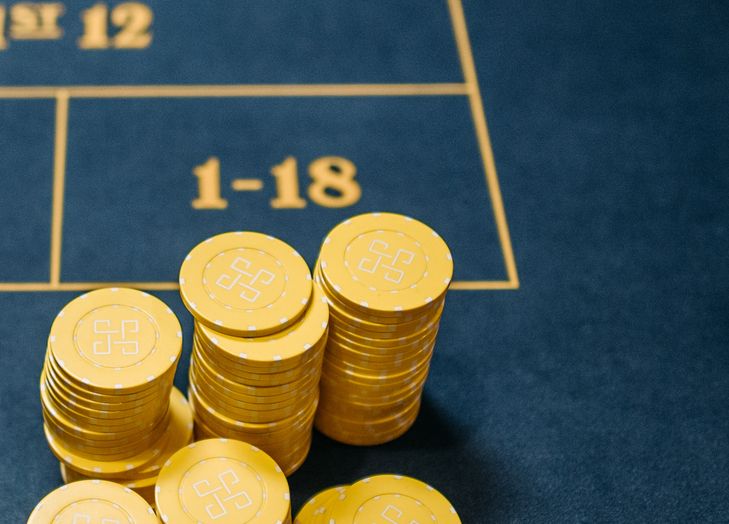
The heat of summer brings more than just beach trips and barbecues; it also ignites a buzz around “transparent gaming.” Players are demanding proof that the spins they watch are truly random, and operators are answering with blockchain‑backed systems that turn luck into verifiable code. As the sun climbs, online casinos are rolling out glittering promotions that promise both excitement and openness.
In this climate of heightened scrutiny, the broader market is watching the evolution of online betting in singapore and other fast‑growing regions. Sites such as Itmanagerdaily provide a useful hub for readers who want to explore the technical side of betting trends without getting lost in marketing hype.
This article dissects the algorithms, probability models, and smart‑contract logic that make bonus structures provably fair, and evaluates how operators can harness these tools for summer‑season marketing. By the end, you’ll understand the mathematics that power transparent bonuses and see practical ways to turn that knowledge into a competitive edge.
The Core Mathematics of Blockchain‑Based Randomness
Blockchain randomness rests on cryptographic primitives that turn a simple seed into an immutable outcome. A typical flow begins with a cryptographic hash function such as SHA‑256. The function takes an input—often a combination of the previous block hash, a player’s address, and a timestamp—and produces a 256‑bit string that appears random. Because the hash is deterministic, the same seed will always generate the same output, yet predicting the output without the seed is computationally infeasible.
Merkle trees add a layer of auditability. Each leaf node holds a hash of a piece of data (for example, a batch of spin results). By hashing pairs of leaves up to the root, a single root hash can verify the integrity of the entire dataset. If any spin is altered, the root changes, exposing tampering.
On‑chain verifiable randomness, like Verifiable Random Functions (VRF) or commit‑reveal schemes, builds on these ideas. In a VRF, a smart contract publishes a commitment (the hash of a secret) before the random value is needed. After the event, the secret is revealed, and anyone can verify that the published commitment matches the revealed value, ensuring the randomness was not manipulated after the fact.
A simple formula illustrates the mapping:
seed = keccak256(blockhash, playerAddress, nonce)
outcome = hash(seed) mod N
where N is the number of possible outcomes (e.g., 64 paylines). This construction guarantees a uniform distribution across the outcome space, satisfying the statistical requirements of fair gaming.
Smart Contracts as the Engine Behind Bonus Mechanics
Smart contracts act as autonomous accountants that enforce bonus rules without human interference. When a player deposits, the contract checks eligibility—minimum stake, jurisdiction, or loyalty tier—then issues a bonus token directly to the player’s wallet. The subsequent wagering requirement is monitored on‑chain: each qualifying bet triggers a state update, decrementing the remaining wager.
A typical bonus contract might follow these steps:
- Deposit receipt – contract logs the amount and timestamps the event.
- Eligibility verification – checks against a whitelist of promotional codes and player status.
- Bonus issuance – mints a bonus token (e.g., 20 % extra credit up to $50) and transfers it to the user’s address.
- Wager tracking – each bet calls
recordWager(amount); the contract accumulates the total until the required multiple (e.g., 30×) is reached. - Payout release – once the requirement is satisfied, the contract unlocks the bonus for withdrawal.
Gas costs are a practical concern. A contract that updates a wagering counter on every spin can consume 20–30 gwei per transaction, which adds up for high‑frequency players. Operators therefore design summer promotions with batch updates or layer‑2 solutions to keep costs low while preserving the provable fairness that differentiates their offers.
Probability Theory Meets Promotional Design
Designing a bonus is a balancing act between player appeal and house edge. Expected value (EV) provides a clear metric:
EV = (Win probability × payout) – (Loss probability × stake)
For a welcome bonus of 100 % up to $100 with a 30× wagering requirement, the operator first calculates the average player win probability on the featured slots (say 48 % RTP). If the average bet is $1, the player must wager $3,000 before cashing out. The EV of the bonus portion alone can be expressed as:
EV_bonus = (0.48 × $100) – (0.52 × $0) = $48
However, the wagering requirement reduces the effective EV because a portion of the player’s stake is locked until the requirement is met. Operators can adjust the multiplier, the maximum win per spin, or add a cashback component to keep the overall house edge at a target level (e.g., 5 %).
Below is a quick comparison of three common summer bonus structures and their typical EV impact:
| Bonus Type | Max Bonus | Wagering Req. | Typical EV Impact* |
|---|---|---|---|
| 100 % Deposit Match | $100 | 30× | +0.5 % to player |
| 20 Free Spins | N/A | 25× (per spin) | +0.3 % to player |
| 10 % Cashback | $50 | None | -0.2 % to player |
*Values are illustrative and assume an average RTP of 96 % across featured games.
By grounding each parameter in probability theory, operators can market “fair” odds while preserving profitability throughout the summer surge.
Transparent Loyalty Programs: Points, Tiers, and Blockchain Tokens
Tokenised loyalty points recorded on a public ledger turn vague “VIP status” into a traceable asset. When a player earns points, a smart contract mints a non‑fungible token (NFT) representing that balance. Because the ledger is immutable, players can verify that points were not deducted without cause.
Tier progression can be modelled with a Markov chain, where each state represents a loyalty level (Bronze, Silver, Gold, Sunburst). Transition probabilities depend on player activity—average monthly turnover, game variety, and bonus usage. For example:
- Bronze → Silver: 0.35 probability per month
- Silver → Gold: 0.22 probability per month
- Gold → Sunburst (summer‑only tier): 0.10 probability per month
Running the chain over a six‑month horizon predicts that roughly 7 % of active users will reach the Sunburst tier, which can be targeted with exclusive “heatwave” boosts such as 2× point accrual on beach‑themed slots.
A bullet list of summer‑specific incentives:
- Sunburst Tier multiplier – double points on any slot with a tropical theme.
- Heatwave Jackpot – a shared pool funded by a small portion of each wager, paid out once per week.
- Cool‑Down Reload – a 15 % reload bonus for players who log in between 2 am and 5 am (peak vacation hours).
These measurable perks, anchored to a transparent token ledger, boost retention and give marketers concrete data to report back to regulators and partners.
Auditable Bonus Audits: From Theory to Practice
Transparency extends beyond the bonus code itself; it includes an audit trail that players can follow in real time. The typical workflow looks like this:
- Explorer query – the player opens a blockchain explorer and locates the bonus contract address.
- Source verification – the contract’s verified source code is displayed, often via a platform like Etherscan’s “Verified Contract” feature.
- Formula check – the audit dashboard pulls the payout formula (e.g.,
payout = min(bonus * 2, maxWin)) and compares it against the on‑chain state. - Transaction log – every bonus issuance and redemption appears as a transaction, complete with timestamps and gas fees.
A midsize casino recently launched a live audit dashboard for its summer slot tournament. The interface showed a real‑time feed of each player’s bonus balance, the remaining wagering requirement, and a checksum confirming that the on‑chain data matched the advertised terms. By allowing anyone to verify the process, the operator reduced support tickets by 18 % and increased player trust during the busiest season of the year.
Regulatory Landscape and Mathematical Compliance
Regulators across the EU, the UK, and Singapore have begun to require explicit fairness disclosures for online gambling operators. In Singapore, the Gambling Regulatory Authority mandates that any bonus mechanism be accompanied by a provable‑fair audit report that includes statistical validation of randomness.
Operators meet these demands by running Monte‑Carlo simulations of their bonus algorithms. For a typical free‑spin promotion, a simulation of one million spins confirms that the distribution of payouts aligns with the stated RTP within a 0.2 % margin of error. The results are then compiled into a compliance dossier submitted to the regulator.
Seasonal regulatory updates often arrive in the spring, giving operators a narrow window to adjust summer campaigns. For example, a proposed amendment in the UK required all wagering requirements to be displayed in “effective multiplier” terms rather than raw multiples—a subtle shift that changes how players perceive the cost of a bonus. By integrating these mathematical proofs into their promotional assets, operators can launch summer offers with confidence that they meet both marketing goals and legal standards.
Player Psychology: Trust, Transparency, and Summer Spending Patterns
Research in behavioral economics shows that visible randomness boosts perceived fairness, which in turn raises the likelihood of a player claiming a bonus. When players can independently verify that a spin’s outcome matches a hash on the blockchain, the trust barrier drops dramatically.
Summer vacation data reveals a 12 % spike in online casino traffic during July and August, driven by travelers seeking entertainment on mobile devices. This aligns with the rise of mobile betting and the growing popularity of sports wagering on the go. Operators who highlight blockchain transparency in their summer ads tap into the traveler’s desire for secure, hassle‑free play.
A short bullet list of psychological triggers:
- Proof of fairness – reduces fear of manipulation.
- Instant verification – satisfies the need for immediate reassurance.
- Seasonal storytelling – frames bonuses as part of a summer adventure, increasing emotional engagement.
By weaving these cues into promotional copy, operators can convert the seasonal spending surge into lasting loyalty.
Future Math‑Driven Innovations: AI, Oracles, and Hybrid Bonuses
The next frontier blends blockchain mathematics with external data sources. Decentralized oracles can feed real‑world information—such as temperature, sunrise times, or major sports results—directly into smart contracts. Imagine a “Beach‑Day Bonus” that triggers a 3× wager multiplier whenever the temperature in a player’s location exceeds 30 °C. The payout would be guaranteed by the contract’s code, while the trigger remains objectively verifiable.
Artificial intelligence adds another layer of dynamism. AI models can analyze a player’s historical betting patterns and generate dynamic bonus structures that adjust the wagering requirement in real time to maintain a target house edge. For instance, a player with a high win rate might receive a bonus with a 35× requirement, whereas a more casual player gets a 25× requirement, all calculated on‑chain and logged for audit.
These hybrid bonuses promise a future where promotions are both personalized and mathematically guaranteed, creating a win‑win scenario for operators and players alike.
Conclusion
Blockchain mathematics is reshaping the way casino bonuses are built, audited, and marketed. From cryptographic randomness to smart‑contract‑driven loyalty tokens, the summer season offers a prime opportunity for operators to showcase provably fair promotions that resonate with a trust‑hungry audience. By grounding bonus design in probability theory, complying with emerging regulatory standards, and leveraging emerging AI and oracle integrations, operators can gain a decisive edge during the high‑traffic months.
Stay informed by monitoring regulatory bulletins and exploring resources such as Itmanagerdaily for the latest developments in blockchain gaming. Experiment with transparent, smart‑contract‑based promotions now, and you’ll be ready to surf the summer wave of player demand while keeping the house edge firmly in check.